Saturday, December 23, 2023

12/22 W.P. Franklin Campground

This is another U.S. Army Corps of  Engineers campground on a lock and dam across the Caloosahatchee River, which is the same river that goes past the St. Lucie lock and dam campground I posted about a couple of weeks ago.   Corps of Engineers campgrounds are nearly always in good shape and have paved campsites, along with electric and water hookups. They are always part of projects built by and managed by the Corps.  The other bonus is that as a senior with a federal senior America the Beautiful pass, I get federal campgrounds at half price, which is very nice for my camping budget!  

(FYI--if you are an American citizen and are at least 62 years old, you can buy an annual ($20) or a lifetime ($80) senior pass.  This pass gets you and anyone else in your vehicle into national parks free, plus it gives you half price on most camping fees.  

One disadvantage to this campground is that the lock is on the far side of the river, and you cannot walk over the dam to the other side to watch boats come in and out of the locks, as you can in St. Lucie and Ortona South, which are the other two campgrounds on the Caloosahatchee River.  An advantage to this campground is that it is supposed to be an excellent fishing place because of the long fishing pier that runs along the dam on the campground side.  

Sorry for the fact that some photos below were taken on a sunny day and others on a more common cloudy day. 

The campground is on the north side of the river, just west of the little town of Alva, FL.  The campground is on an island, so you have to enter via a long roadway. 


The photo belong is looking past the campground gatehouse down the road above to the highway.


First, some photos of the campground.  This view faces east along the river. 

My motorhome, parked on a spot with a good view of the dam and river.


This view is the slightly larger part of the campground on the west side of the dam, looking towards Ft. Myers.


 And some photos of the dam and fishing pier.  


This is a telephoto shot of a boat going through the locks on the far side of the river.  

This is the fishing pier. 

Looking east down the river. 


I saw this limpkin today, just as I was getting packed up to leave tomorrow.  


Monday, December 18, 2023

12/18 Some Animals I Have Enjoyed on my Travels

Yesterday, I posted about some animals whose visits I did not enjoy, but there have been other animal visitors I remember fondly.  Overall, I enjoy watching animals and their behavior.  Here are some of my favorites:

  • One of my favorite campgrounds is at Willow Beach Marina.  This place is part of Lake Mead National Recreation Area, but on the Arizona side of the Colorado River about 13 miles south of Hoover Dam.  It is very dry there, but amazingly beautiful with the mountains on all sides and the blue of the Colorado River as it heads toward Lake Mohave, about 30 miles south.  The campground here is relatively new, and when it was built in this very dry area, they planted a lot of desert plants and clumps of grasses, each plant with its own drip irrigation connection.  The result is a LOT of desert cottontails have taken up residence under the bushes and grass clumps.  The number of bunnies and their friendliness is also increased by the fact that the long-term camp host feeds them, as do a few campers like me.  Check out these adorable "pests" with their big ears on this post:  https://grandmajjb.blogspot.com/2021/01/111-willow-beach-campground-critters.html.  Note: Before you feed these little guys, make sure it is OK with the park and you know what they should and should not eat. For example, carrot top greens are better for them than carrots, and they should never be fed gas-producing vegetables like cabbage.  MOST IMPORTANTLY, NO WILD ANIMAL, EVEN DUCKS AND GEESE, SHOULD EVER BE FED BREAD, NO MATTER WHERE THEY LIVE OR HOW HUNGRY THEY LOOK!!! 
  • Also, if you scroll down on the above post, past all the bunnies, check out the Gambel's Quail.  These little guys do more running than they do flying.  They stick together in large family groups, or coveys, searching for seeds.  What makes them fun to watch is their running around on little legs at top speed, making sure they keep up with the group, and cheeping constantly to make sure they do not get lost.  If a bird does get separated, it will panic and run even faster after the cheeps of the other birds.  This also makes them very hard to photograph, although I have discovered that a tiny bit of bird seed will briefly slow them down.  
  • I also like to watch chipmunks and ground squirrels.  They are very similar looking animals, with stripes on their bodies.  However, generally, but not always, chipmunks have stripes on their faces and bodies, while ground squirrels have stripes only on their bodies.  I once spent most of a day while I was grading college student papers, looking out my window and watching a chipmunk steal dry dog food from a nearby RV patio.  It was a state park in Oregon, and a family with a large dog had left a 50 lb bag of dog food outside while they were gone.  The little ambitious chipmunk made dozens and dozens of trips with full cheeks, crossing the park road to add the kibble to his winter larder!  (I know it was a chipmunk because it was in a wooded area, and because ground squirrels do not store food for the winter.)  Here is a good article describing the difference:  https://www.reconnectwithnature.org/news-events/the-buzz/what-the-difference-chipmunk-vs-ground-squirrel/
  •  I once shared my campsite with a gopher tortoise.  I have seen these in several campgrounds in Florida and Georgia, but this one had apparently dug his burrow right at the edge of my patio area in my campsite in a state park in Georgia.  I suspect he did this over the winter, not realizing how busy the area would get during the summer.  His burrow was about 6' from the side door of my motorhome, and every time I went outside and walked past him, he would hiss at me.  Gopher tortoises live in wooded areas, and dig homes in sandy soil.  They can live up to 70 years in the wild, and are federally protected because their burrows provide homes for a lot of other animals including snakes, foxes, and other animals.  I did not post about him, but I did take photos of several other gopher tortoises this past November in St. Lucie Lock and Dam Campground.  Scroll down about halfway:  https://grandmajjb.blogspot.com/2023/11/1121-st-lucie-south-lock-dam-campground.html
     
  • If you have ever visited the south rim of the Grand Canyon, you have probably seen elk wandering around the visitor areas.  The CG website says, "Because elk are not native to northern Arizona, they are not well adapted to the dry climate. As a result, they are often dependent on human sources of water, and will drink from puddles underneath bottle-filling stations and graze on watered vegetation around homes and buildings."  What this notice misses is that elk were introduced to the area by the original park superintendent in 1926.  Not only will they drink from puddles underneath water fill stations, but many of them know how to turn the handles on the water fill stations in order to get a drink.  In addition, they know how to turn on the water faucets in the campground.  Check out the first photo on this blog page:  https://grandmajjb.blogspot.com/2020/10/1024-grand-canyon-trailer-village-to.html   (Unfortunately, the elk do a very poor job of turning off the faucets when they are finished, so if you see a faucet running, please turn it off for them.)  Elk will also beg for water in the main full-hookup Trailer Village campground, as I learned as a female surprised me once by coming up next to me while I will filling up my fresh water tank at my campsite.  Her nose was about 4" from my hand holding the hose, and her back was almost as tall as I am!!  I held very still so as not to scare her, and when I was finished, she followed me to the opposite side of my rig where I gave her a drink.  Elk are huge and can be dangerous, so I moved slowly and carefully.  Next time I am there, I will leave out a very large dog bowl at the rear of my rig.  
  • Another animal I enjoy are bighorn sheep.  There are always some of the males hanging around the campground at Valley of Fire State Park, about an hour northeast of Las Vegas.  The males/rams mostly stay in the valley, while the females or ewes stay up in the mountains with their lambs where they are safer.  A few years ago,  I had a fun experience watching a small bachelor herd try to take advantage of a leading water faucet at Site in the campground.  I missed the head butting contest during which the oldest ram won ownership of the faucet. I arrived just as he was guarding it, but this did not last very long, as the park maintenance man arrived to fix it.  Check out the saga and the results at this location:  https://grandmajjb.blogspot.com/2021/01/14-valley-of-fire-bighorn-sheep.html    There are a couple of photos of ewes and almost grown lambs higher up towards the end of this blog posting.  Notice their thinner and shorter horns. https://grandmajjb.blogspot.com/2022/11/1111-more-valley-of-fire.html
     
There are a lot of other places you can experience elk, big horn sheep, and other animals, but these have been some of my memorable experiences.


Sunday, December 17, 2023

12/17 Camping & Critters That Invade

It rained all day yesterday, last night, and part of this morning in southern Florida, and I have been very lazy, so I thought that while I was watching television tonight, I would write about some of the experiences I have had with critters that invade my motorhome.  

When you do the kind of traveling I do (in a motorhome and mostly in federal, state, and county campgrounds), you end up having experiences with critters.  In eleven years, I have had more than most people simply because I have been to so many places over such a long period of time.  I will try to write about the most memorable experiences I have had. 

Insects that Invade

One important thing to know is that a motorhome is very different from a "sticks and bricks" home in several ways:

  • First, nearly all motorhomes have slide-out walls that make your RV larger when you are camped, which means that unless they fit absolutely perfectly and have something that seals them against your rig, you will have a lot of cracks that critters that can get into.  Even if you start out with slides that fit tightly, they will not stay that way. 
  • A motorhome also has an engine compartment, so there are spaces around things like your accelerator and brake pedals from that compartment.  There also may be spaces around AC and heater vents, and other things.  I have never seen anything enter that way, but I know a lot of cold air does. 
  • Also, all RVs have entrances into your rig through spaces around water and sewer pipes, electrical connections, and who knows what else.  They are supposed to be sealed, but often are not closed off.
  • In addition, at least in my motorhome, window screens do not fit very well, so there are spaces where insects can get in when windows are open.

I imagine that if I could have afforded one of those $500,000+ motorhomes, things would have fit better, but I am not 100% sure of that.  Anyway, I am stuck with what I have.  

Other than the normal, every day times insects get into my rig, I have had two major insect invasions.  

  1. My first was about 7 years ago when I was camped at Dam West Campground, along Carlyle Lake in central Illinois.  It was fall, and I did not realize that they were threshing and taking in soybeans from a large nearby field.  This apparently disturbed several thousand ladybugs and stink bugs.  In looking for a nice, warm place to spend the coming winter, they covered the entire one side of my rig, with a few hundred of each making their ways inside and hiding out. For the next 3-4 months, I killed and flushed a dozen or so ladybugs and captured at least 4-5 stinkbugs each day.  Not wanting to crush the stinkbugs, I kept them in a ziplock bag and i sealed and tossed each day.
  2. The most recent infestation I have had was early last June in Cherry Creek State Park, just east of Denver, Colorado.  The first night, I slept fairly well, but woke up about 5 am to find dozens of moths flying around.  I got up and started electrocuting them with my  bug wand.  It was just beginning to get to be daylight, but they were still coming in somehow, and it seemed like the more i killed and flushed, the more came in.  These were the big miller moths, and I was getting frantic, with at least 100-200 moths flying around inside at any one time.  I panicked and got out the can of outdoor insect spray and hit my bathroom and kitchen, killing a bunch, and closing the bathroom door.  I got dressed quickly, put my slides in, unhooked, and took off, with dead moths littering the floor and everywhere.  I headed east into Kansas and stopped for some breakfast and to use a McDonald's restroom because my bathroom was a disaster, taking a few minutes to do some quick research on moths in Colorado.  Turns out that miller moths hatch in western Kansas and head for Colorado's front range every May or June, and this was a banner year for them.  I stopped at a hardware to get traps and more spray, and then drove 384 miles to central Kansas which was apparently moth-free.  (I almost never drive more than 200 miles in one day, but I was desperate.)  Made it to a campsite, hooked up, put slides out, and got my vacuum cleaner going.  I was exhausted, but could not even sit down or use my bathroom until I vacuumed and washed off all the spray I had used.  Not a good day, but here is an article about moth invasions in Colorado.  https://denverite.com/2023/05/15/colorado-miller-moths-horror-infestation-nuisance/

 Other Invaders

I have had some other non-insect visitors, but overall, these were a lot less bothersome than the usual insects.
  • In Sebastian State Park in Florida a few years ago, I was camped at the back of the campground, next to a swampy area.  I started to hear some thumping and bumping under my bed just before daylight one night.  To explain: My bed lifts up and has storage underneath it.  That area is pretty well sealed from the outside, but under it, there are a couple of large storage compartments that are accessed from the outside.  I had locked them, but what I did not realize was that there was access from a next door storage compartment I had left open. The locked storage area had a large bin on each side, and an 8" tall area connecting the two.  I use this area to store my bunk ladders, my outside ladder, some tools and other long maintenance things.  I was pretty sure the thumping was caused by something a lot bigger than a mouse, so as soon as it got light outside, I got dressed, grabbed a flashlight and my senior grabber and headed outside.  (The grabber was to reach in for what I was pretty sure was a racoon.)  I opened the storage bin door, saw two "bandit" eyes looking at me, and yelled at the racoon that was staring at me.  It flew out and ran off into the swamp, but it took me half an hour to pick up the tiny bits of paper towel it had torn up to build its nest, I assume.  
  • Two years ago in August, I stayed at Elk Creek Campground in the Curecanti Recreation Area, near Gunnison, CO.  It is a pretty place, but extremely dry.  On the second night, I was watching television about 11 pm, with all the lights on, and saw a little mouse come out from under my couch.  It looked at me with an "Oops, didn't know you were awake" look and ran back under the couch.  I had not had mice in years, so at midnight, I was outside with a flashlight trying to find my old mousetraps.  No luck, so went to bed and the next day drove 35 miles back to Gunnison and spent $53 on mousetraps!  I caught three mice that night and two mice the next night.  Left the following day, for obvious reasons!!!  Camp hosts admitted there were a lot of mice in the campground. I assumed they were getting in around my slides, but I really don't know how they got in.  
  • I once had a tiny Florida lizard come in and race around, but it left on its own somehow, and really never bothered me.  
  • I also once had a tiny tree frog in my motorhome.  I had accidentally left my passenger's window down for a few hours, so I assume it crawled in that way.  Two mornings later, I was lying on my side in bed at 5:30 am, facing the little shelf and the wall next to my bed.  I opened my eyes and found a tiny green tree frog making its way up the wall about 10" from my face, which is a little startling that early in the morning.  I jumped up, gently picked it up with a paper towel and tossed it out the door, watching it walk away.  (They tend to walk instead of jumping.)  They are rather cute little frogs with suction cups on their feet that enable them to climb even very smooth surfaces, so I did not want to hurt him or her.  Then, of course, I had to wash the wall down where he had been, and by the time I got all that done, I was wide awake for the day.  

Tomorrow night, I will write about some of the outdoors animals that I have encountered who actually stayed outdoors!!  


Thursday, December 7, 2023

12/7 Myakka River State Park & Old Prairie Campground

I have spent a couple of weeks at this state park in all of the Decembers I have been in Florida.  (I alternate winters in Florida and the Western states.)  I particularly like the full-hookup campground, Old Prairie, near the park entrance.  It is a long way from the lake and store, but it is quiet and the camp sites are well-separated with vegetation and the sites are extremely large. 

This is also the newest of the three campgrounds in this very large state park, and thus also has newer restroom/shower facilities, plus it has a washer and dryer in each of the two restroom facilities here.  Roadways are paved, but campsites are the nice, larger gravel. 

First, a photo of the store down by the lake.  Usually, I spend more time down there, but not this year.  If I have time on my way out on Saturday, I might go back and add some photos. 

Next a photo of one of the two restroom/shower/laundry fcilities in the Old Prairie campground.

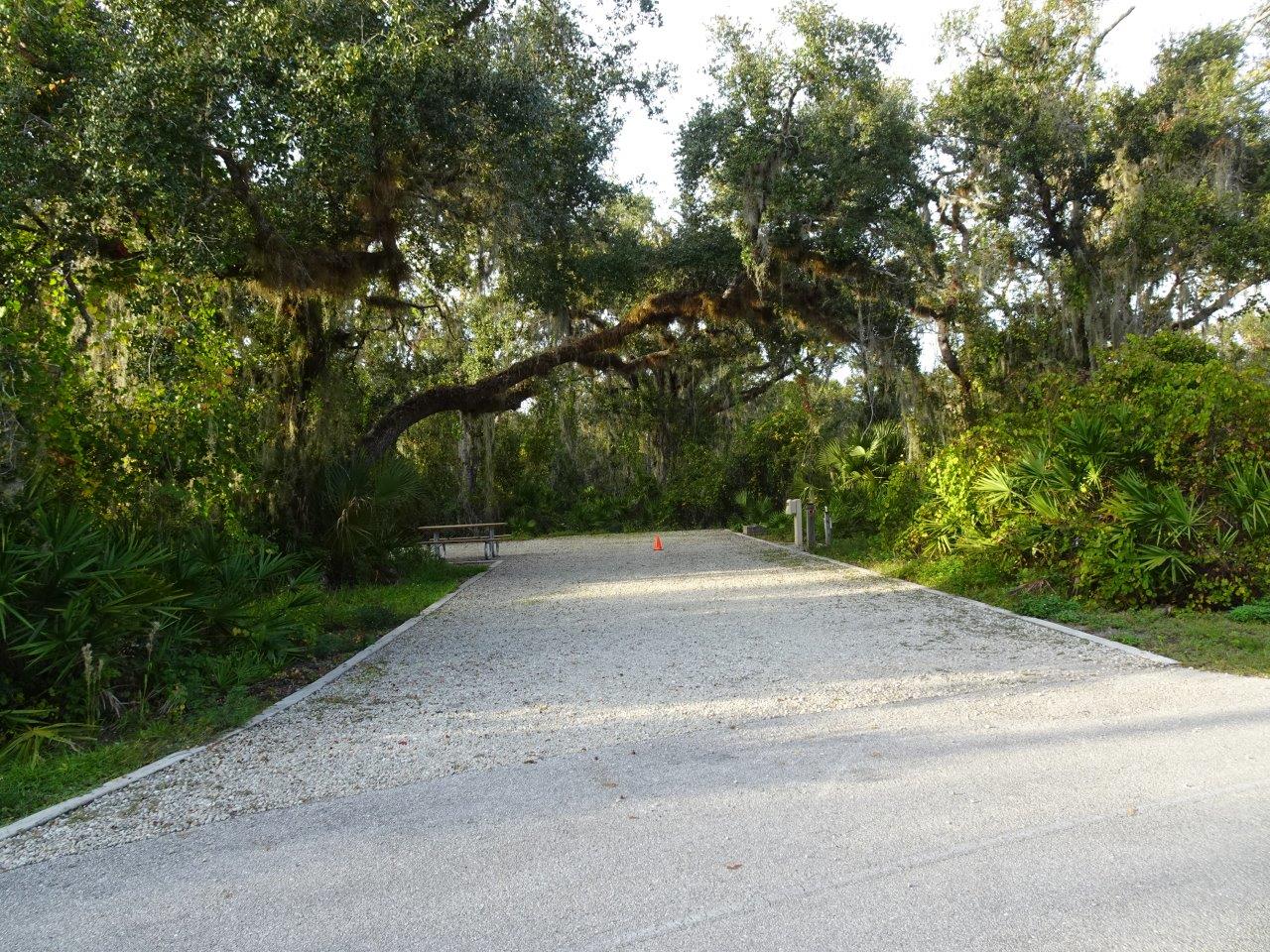
And my pull-through campsite.  I am parked towards the far end because that is where the sewer hookup is, but you can see that you can fit a very long RV in this site, plus a couple of cars.  This refutes all the RV owners who believe the myth that you can only fit in a state park or national park site if you have a rig shorter than 30' !!!!!


And some of the other sites and campground roadways. 

Even the back-in sites are large!!  You can also see how all the vegetation between and after sites makes each site very private. 


A couple of days ago, I was driving on the road that goes to what they call the Bird Walk.  It is a raised boardwalk in an area along the lake that is a good place for watching birds.

However, there was a traffic jam with people stopping cars from passing as they were stopped along the roadway.  I saw a big snake crossing the road and causing all the fuss, so I quickly pulled over and ran up to take photos.  

This is the biggest and fattest Eastern Diamondback Rattlesnake I have ever seen!  He was about 6' long and at least 3-4" in diameter--one big and healthy snake!!   He was also a very laid-back snake and not in a hurry to go anywhere, but eventually he headed into the woodsy area. 


As he disappeared into the leaves, I got a good picture of his tail!!  His rattler was about 4-5" long.  He did not try to rattle it, however. 

This is the Bird Walk.


It's been a good 12 days here, with highs varying from mid-80s to low 70s.  Some nights have been warm enough to run AC all night and some cool enough to keep the furnace on!!  Highs in southern Florida are expected to hang around the 70s for the next month, with lows in 40sand 50s, which I hope will slow the mosquitos down a bit. 


12/5 Marie Selby Gardens

Marie Selby Gardens are located close to downtown Sarasota on the bay.  It focuses heavily on air plants--plants that do not root on soil, but attach themselves to trees or other objects and get their water from rain and humidity.  

I purposely rented a car for a few days because I knew that they had major construction around this botanical gardens, and that I would almost certainly not be able to park my big motorhome.  It was a good decision.

Below is a map of what the gardens look like now.  It may not mean much to you if you have not been here, but basically, the original gardens have been the 15 acres occupied by two homes on the old estate of Marie Selby.  They have owned the land across the road for several years and used it as a parking lot, but they have now also acquired and removed several homes next to the old parking area. 

On that land, they are building a new multi-level parking garage, which they have almost finished, but since it was not quite done, they had mandatory complimentary valet parking.  They have also almost finished the new visitor center next to the parking garage. (I tried to take photos but there were too many big pieces of equipment in the way.) When the parking structure and new visitor center open in a few weeks, they will begin tearing down the old visitor center and building several brand-new greenhouses, which will give them more space to house their collections.  That new area may take another year or two, but I am looking forward to sometime returning to see it when it is finished. 

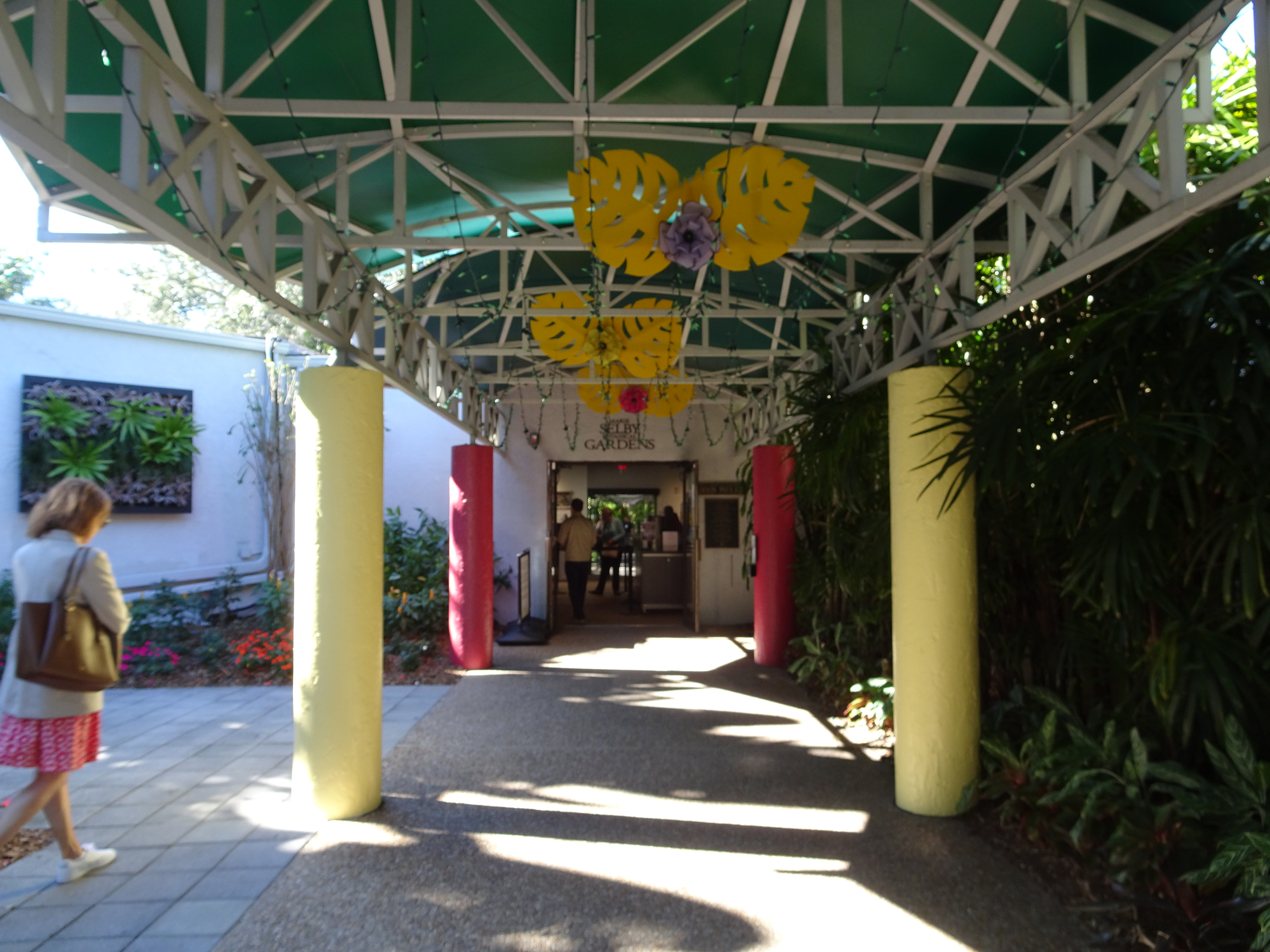
So, after parking and walking a long block, you enter the current visitor center.


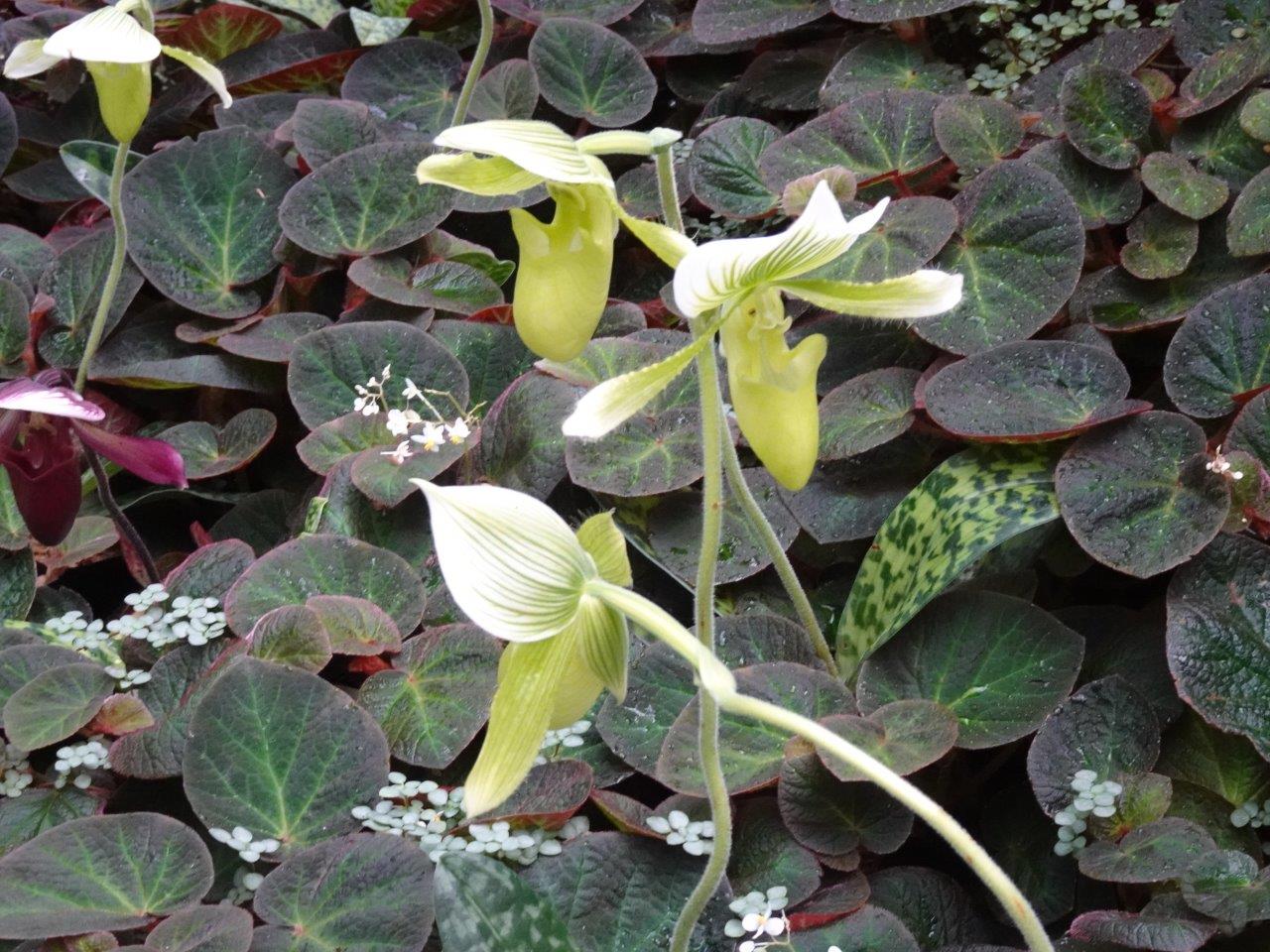
As usual, after paying my entrance fee, I immediately headed for the greenhouses.  Here are some photos of the orchids in bloom. 


Lots of ferns here. Many ferns attach themselves to trees, so they also quality as air plants.


Another category of air plants are the ones that collect rainwater and unsuspecting insects in cups or other receptacles, and live on those.  The next few photos show these insect-eating plants.


Some cycads.  These are the ancient plants that dinosaurs ate before there was grass or flowering plants.  Cycads are either male of female and produce very large cones with seeds in them.  They are NOT air plants, but the gardens have a very large and interesting collection. Here are some examples. 


This is a cone I found in the above plant.

I was told these were developing leaves, not a cone.


Back to the main garden, this is a candle tree.  The fruits are very waxy and resemble candles.

 
This one of two very large banyan trees that were planted by the Selbys.  


Last trip in December 2021, I took photos of the main house on the estate, but this is just a secondary house on the property. It is now used as a cafe and ice cream shop.

The estate was facing Sarasota Bay, but behind the house, they have a large river with homes and boat docks for each.


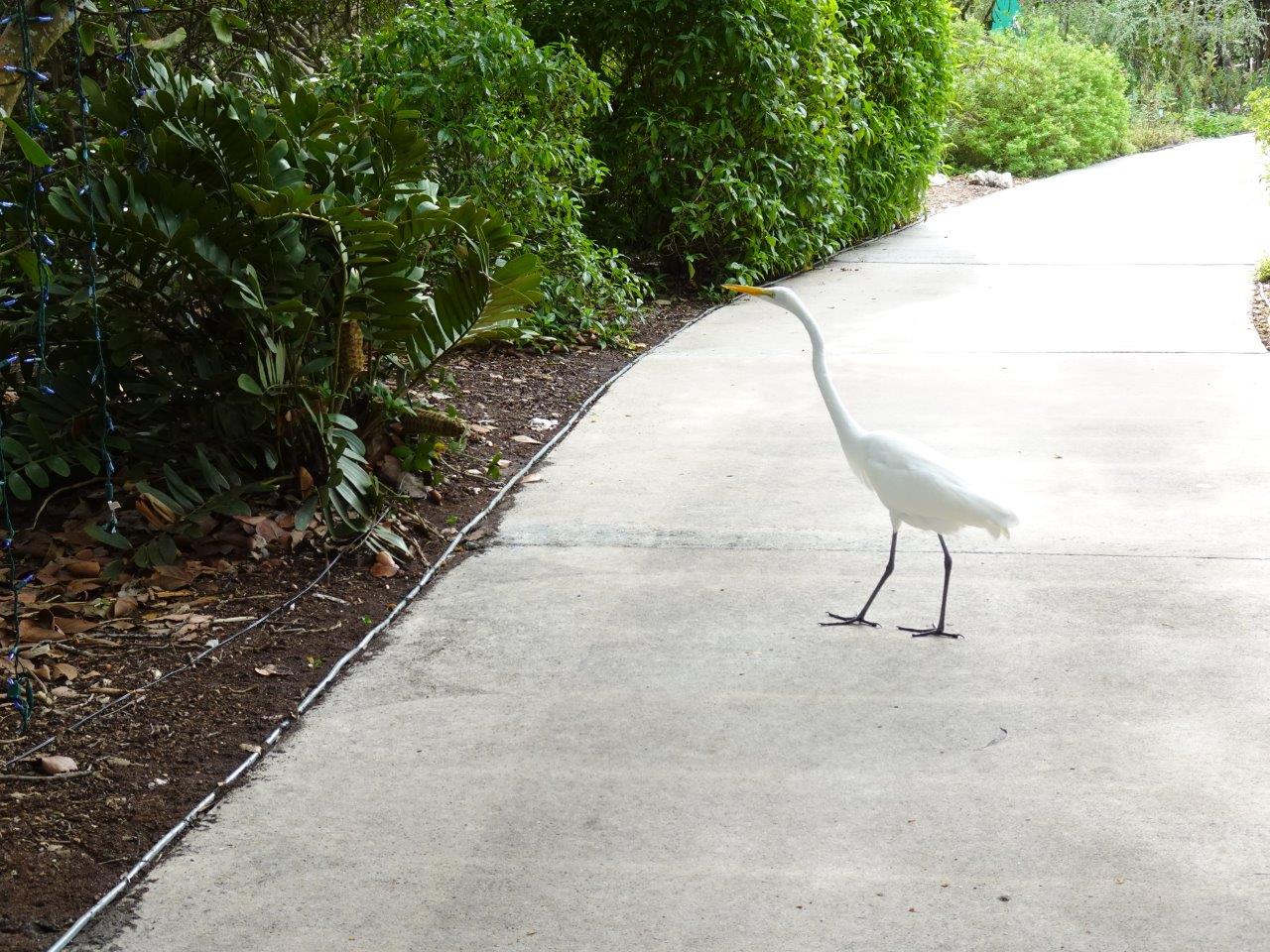
Several of us watched this great white egret for about 10 minutes.  He/she was not very shy, and tolerated us as he found and ate three small lizards and one bug.

Down the hatch!!

 
Nice, cool breeze off Sarasota Bay. 
 

And the walkway back to the visitor center.


There was still more to see, but I was tired and needed to pick up some groceries and get back to my campsite before the sun set.